
Safety basics
Changing table safety: the habits that matter more than the table
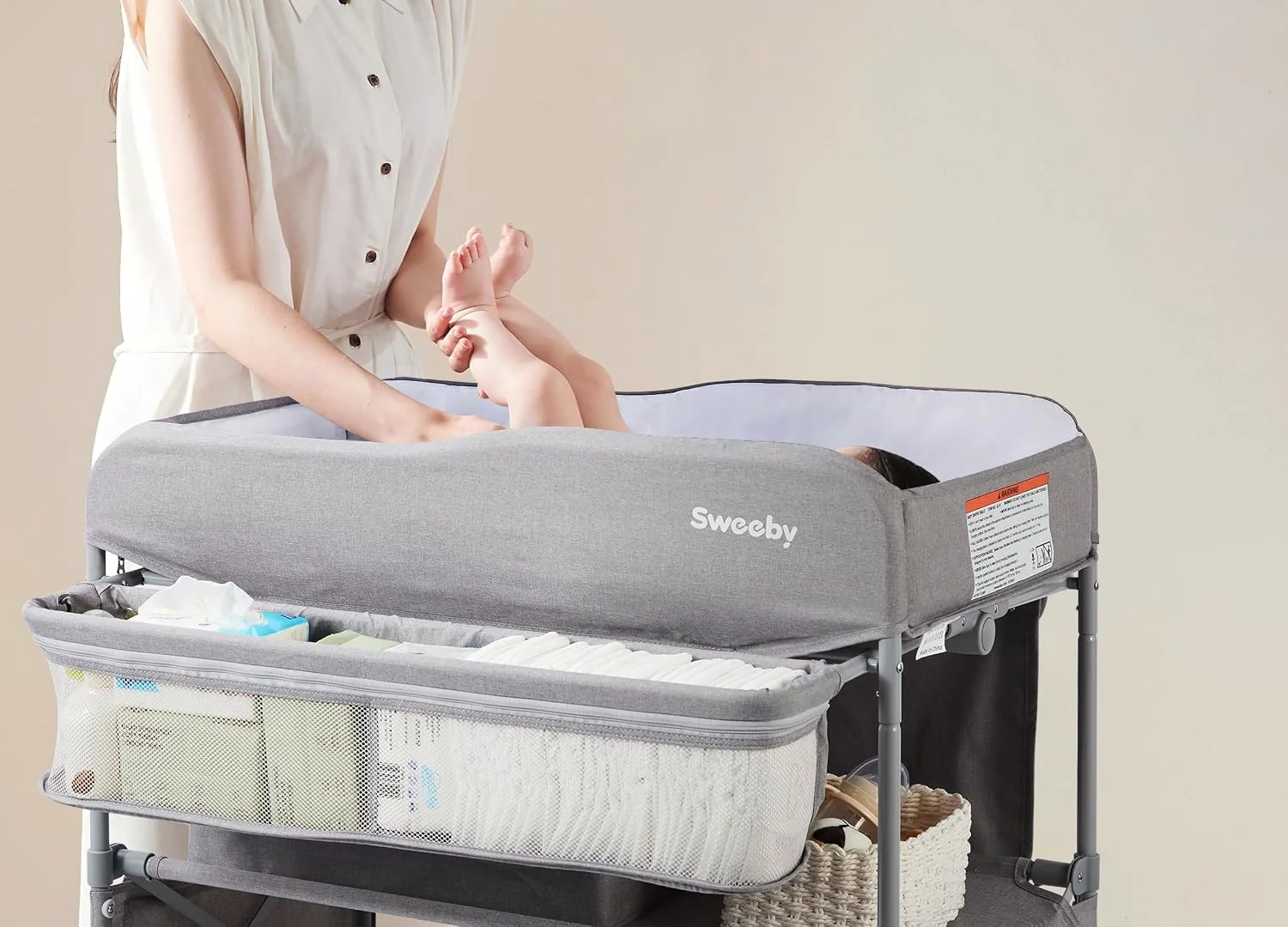
A changing table makes a diaper change easier on your back. It also puts your baby three feet off the floor on a narrow surface, and babies learn to roll long before parents expect them to. The table matters. How you use it matters more.
What the safety rules ask of the table
In the U.S., changing tables fall under a federal rule from the Consumer Product Safety Commission, 16 CFR part 1235, which points to the ASTM F2388 standard. It asks for barriers that keep an infant from rolling off, a frame that is stable and strong, and restraints. The American Academy of Pediatrics adds its own checklist for parents: a guardrail about 2 inches high on all four sides, and a top that dips slightly in the middle so the baby settles toward the center.
Never step away
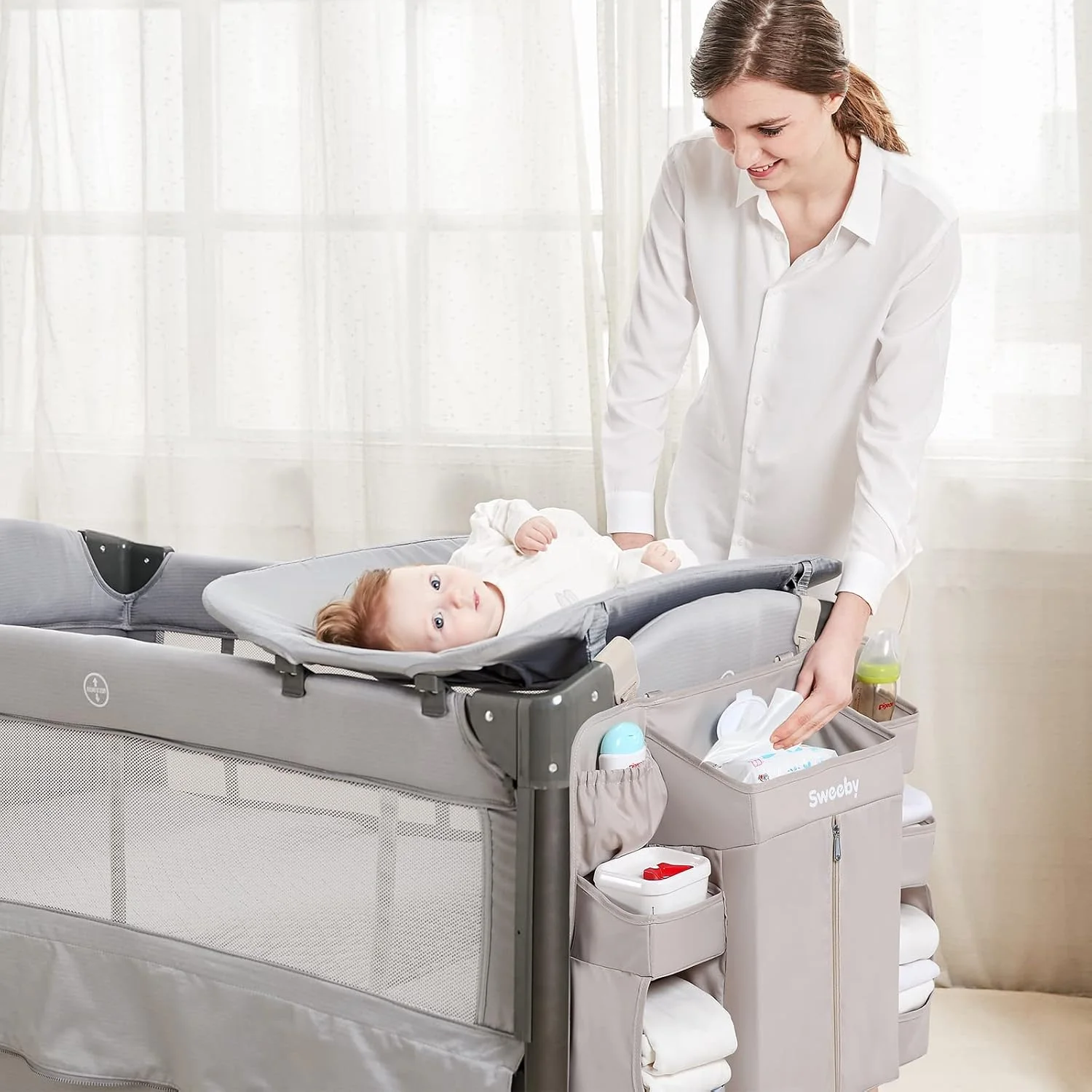
This is the rule the Academy puts first, and it is the one that fails most often. Never leave your baby on the table, not for a moment, not even strapped in. The doorbell, the phone and the dropped wipe on the floor all feel like one second. A roll takes less.
If you have to leave, take the baby with you or put them down on the floor or in their crib first. It takes five seconds and removes the whole risk.
Use the strap, but not instead of your hand
If your pad has a safety strap, buckle it. The Academy is clear that the strap is a backup and not a guard: keep one hand on your baby for the whole change. A strap slows a roll down. Your hand stops it.
Set up before the diaper comes off
Most falls happen during a reach. Before you start, put the clean diaper, the wipes, the cream and a change of clothes where your free hand can get them without turning away. The Academy puts it this way: supplies within your reach, but out of your baby's.
| Keep within your reach | Keep out of your baby's reach |
|---|---|
| Clean diaper, opened and ready | Powder containers and creams with open lids |
| Wipes, lid already open | Diaper bags and plastic wrappers |
| A clean outfit for the leak you did not expect | Anything small enough to go in a mouth |
The caddy in the Sweeby catalog clips to the side of the table and keeps all of it in one place. Hang it on the side you change from, so your hand finds it without looking.
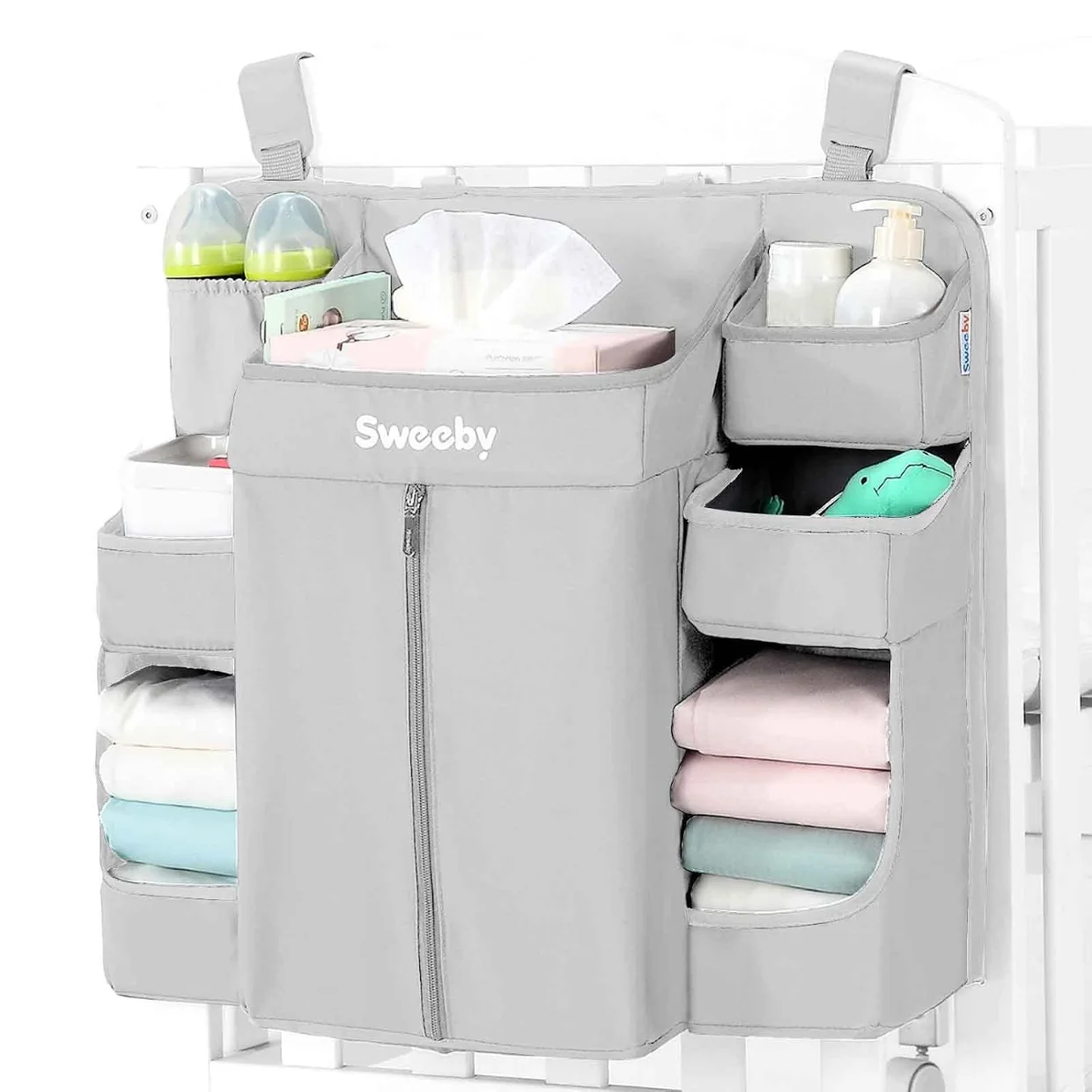
Sweeby Hanging Diaper Caddy
Six compartments and a zippered bag that hang where you change. From $35.14.
See sizes and colorsHeight, wheels and where the table stands
A table at the right height keeps you standing straight, which keeps you steady. Set it so your forearms rest level on the pad. The Sweeby Folding Changing Table sets at four heights between 33.5 and 36.4 inches, and its four wheels lock. Lock all four before the baby goes on, and stand the table away from windows, blind cords and shelves a baby could grab.
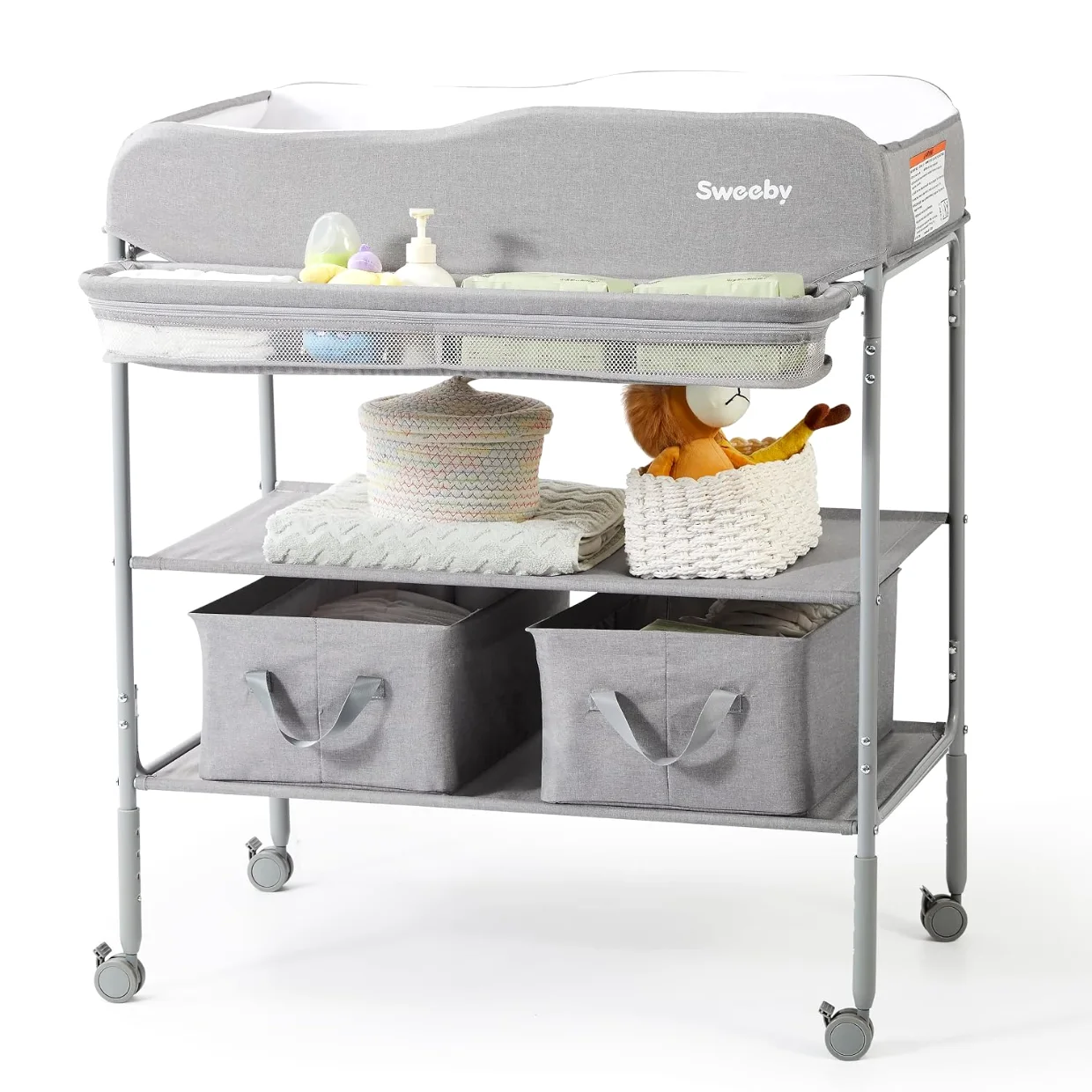
Sweeby Folding Changing Table
Four heights, locking wheels and a waterproof pad that wipes clean. From $119.99.
See sizes and colorsWhen to move to the floor
Once your baby is rolling hard, twisting and trying to sit up mid-change, many parents move changes to a mat on the floor. It is slower on your back, and a floor cannot be fallen from. Keep the table for the calm changes, and keep a mat under the bed for the wriggly ones.
The same product registration card rule that covers playpens covers changing tables: fill it in so you hear about any recall. For more on the playpen side of the nursery, read playpen, play yard or crib.
Keep reading: Playpen, play yard or crib: what each one is for · How to choose a playpen size for your room