
Safety basics
Playpen, play yard or crib: what each one is for
Walk into any baby store and three things look almost alike: a big fabric playpen with mesh walls, a smaller play yard with a mattress pad, and a crib. Parents use the words for each other all the time. The rules do not, and the difference decides where your baby can safely fall asleep.
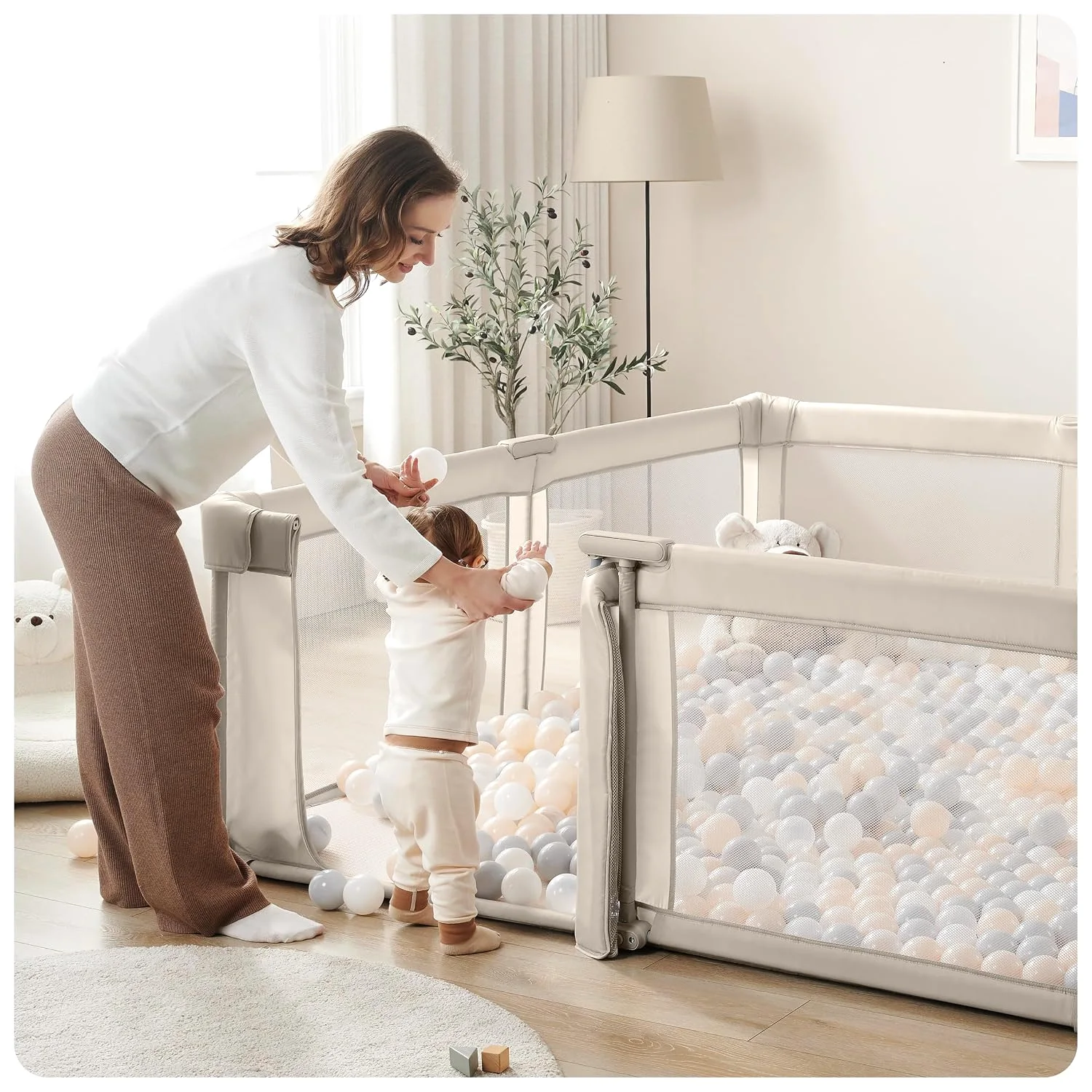
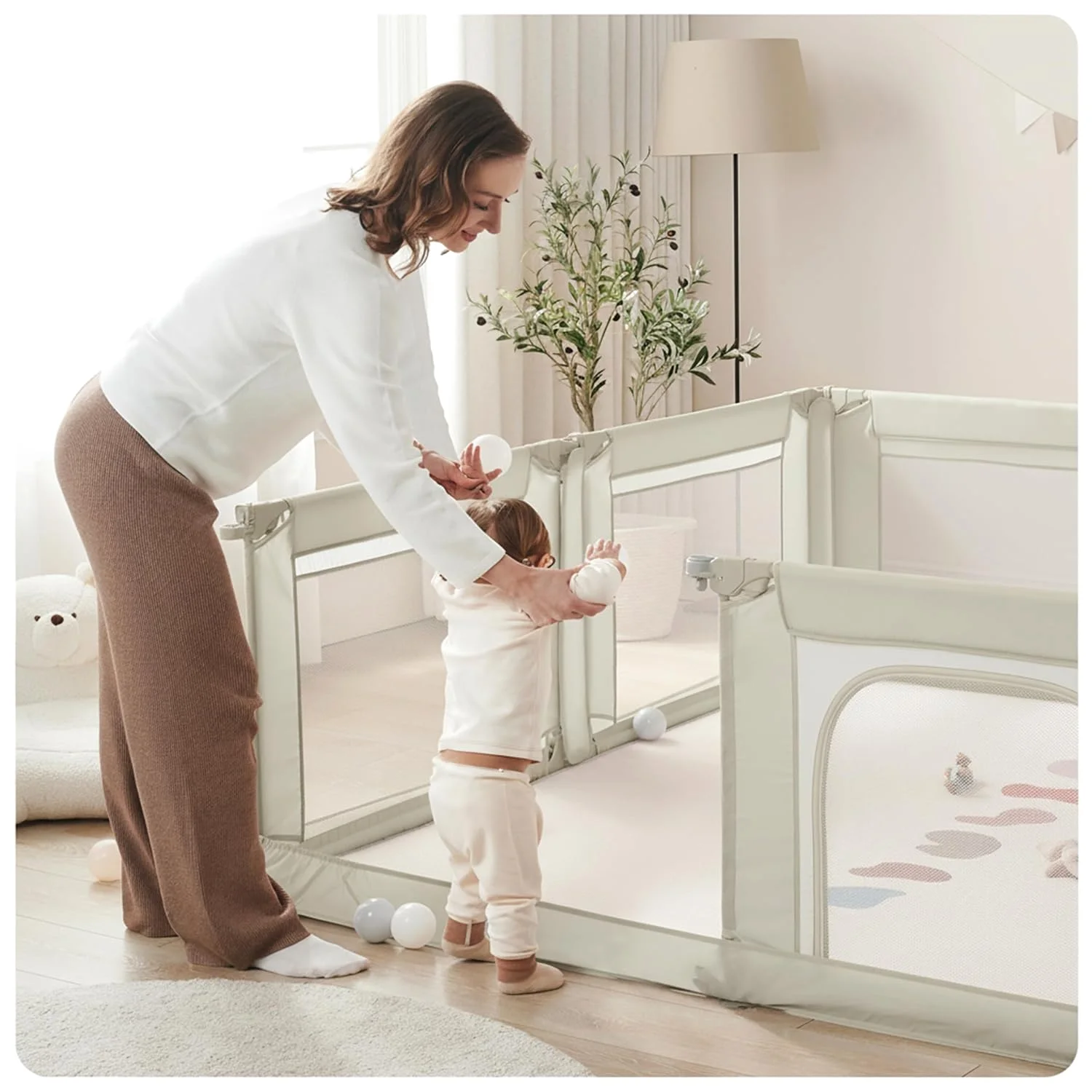
A panel playpen is a fence around a play space
A Sweeby playpen is a freestanding enclosure. It stands on the floor, surrounds a patch of it, and keeps a crawler inside while you are in the room. The U.S. Consumer Product Safety Commission calls this an expandable enclosure, a self-supporting barrier meant to surround a play space. Its rule for gates and enclosures, 16 CFR part 1239, points to the ASTM F1004 standard and is written for children from 6 to 24 months.
What that standard looks at tells you what the product is for. Openings a head could get through, how tall the sides are, how the latches and hinges behave, pinch points and the gap at the bottom. It is a standard about keeping a mobile child in and unhurt while they play. Nothing in it is about sleep.
A play yard is a portable crib
A play yard is the smaller, deeper mesh box with a thin mattress on its floor, the one that folds into a bag for trips to the grandparents. It is made as a place for a baby to sleep. When the American Academy of Pediatrics lists safe places for a baby to sleep, the play yard is on the list alongside the crib, the bassinet and the portable crib.
So a play yard can do the playpen's job for a young baby who is not crawling far yet. A panel playpen cannot do the play yard's job. Every playpen in the Sweeby nursery line is the panel kind, made for play.
Where your baby sleeps
The Academy's advice is short and firm. A baby sleeps on their back, in a crib, bassinet, portable crib or play yard that meets the safety standards of the Consumer Product Safety Commission. The sleep space holds nothing else: no pillows, blankets, bumper pads or toys.
Babies fall asleep wherever they happen to be, and a playpen full of soft toys and a padded mat is an easy place to drop off. When that happens, lift your baby out and move them to their crib or play yard, on their back. The Academy gives the same advice for a baby who dozes off in a car seat or stroller.
| Panel playpen | Play yard | Crib | |
|---|---|---|---|
| What it is for | Supervised play on the floor | Sleep and play, often on trips | Sleep |
| Floor space | 15 to 39 sq ft in our range | Small, about the size of a mattress | Standard crib mattress |
| Safe for sleep | No | Yes, if it meets the federal standard | Yes, if it meets the federal standard |
| What you check | Latches, gaps, the wall height against a climber | Mattress fit, nothing loose inside | Mattress fit, nothing loose inside |
How to use a playpen well
- Stay in the room. A playpen gives you both hands, not an empty house.
- Stand it on a flat floor or a firm rug, away from cords, curtains and heaters.
- Keep large toys and boxes out. Anything a toddler can stand on turns a 27-inch wall into a step.
- Check the gate or door each time you step out. It should not move when you push it.
- Stop using it when your child can climb out. The rule is written for children up to 24 months for a reason.
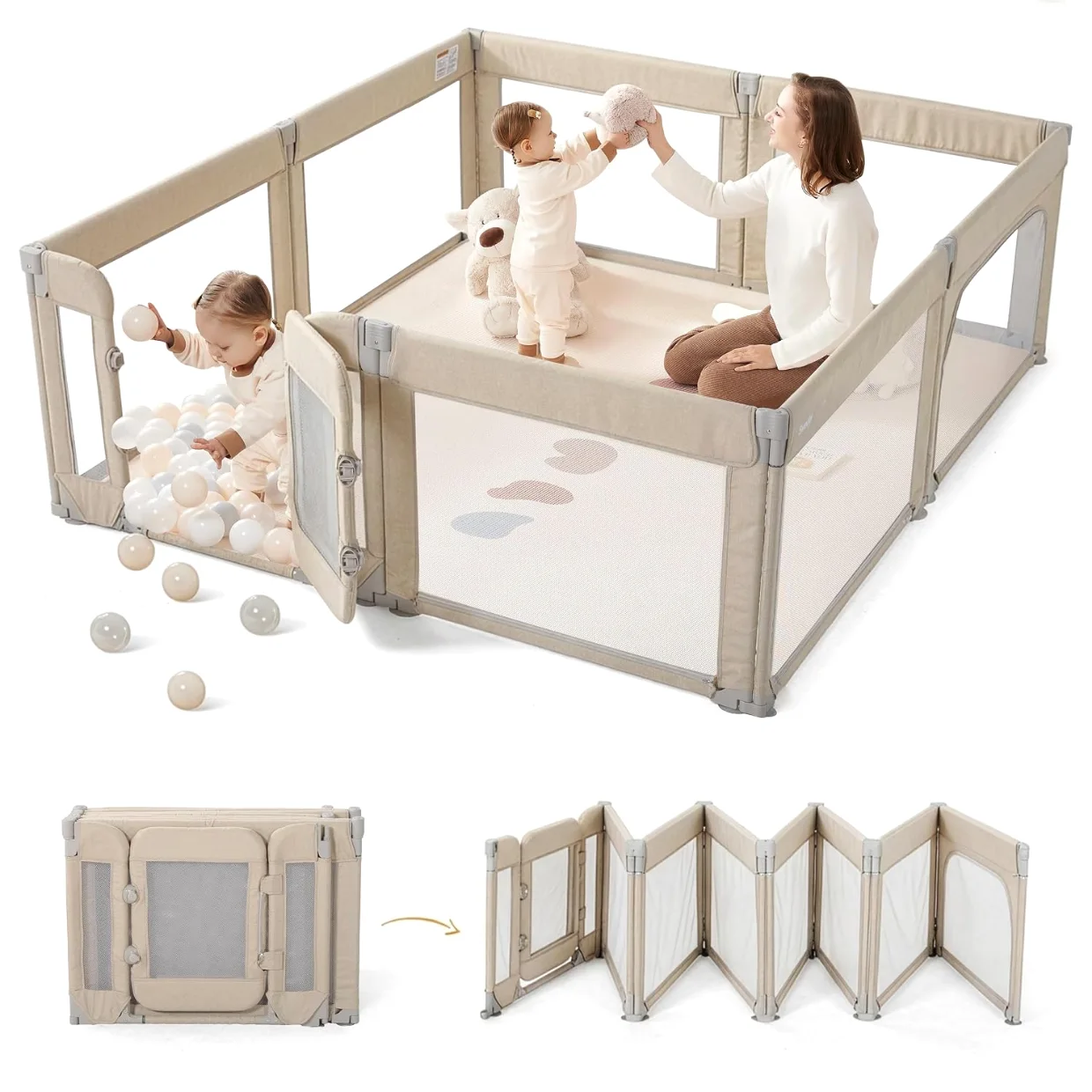
Sweeby Walk-In Gate Playpen
A walk-through gate with two latches, and panels you can rearrange around your furniture. From $143.93.
See sizes and colorsRegister it and keep the card
Gates and enclosures, play yards and changing tables all come with a product registration card. The Consumer Product Safety Commission requires it so the maker can reach you if there is a recall or a safety notice. Fill it in the day the box arrives, and if you ever buy baby gear secondhand, search the Commission's recall database before it goes on your floor.
Our size guide covers the next question, which is how big a playpen your room can take. For a baby who sleeps at your bedside, look for a bassinet or play yard made for sleep.
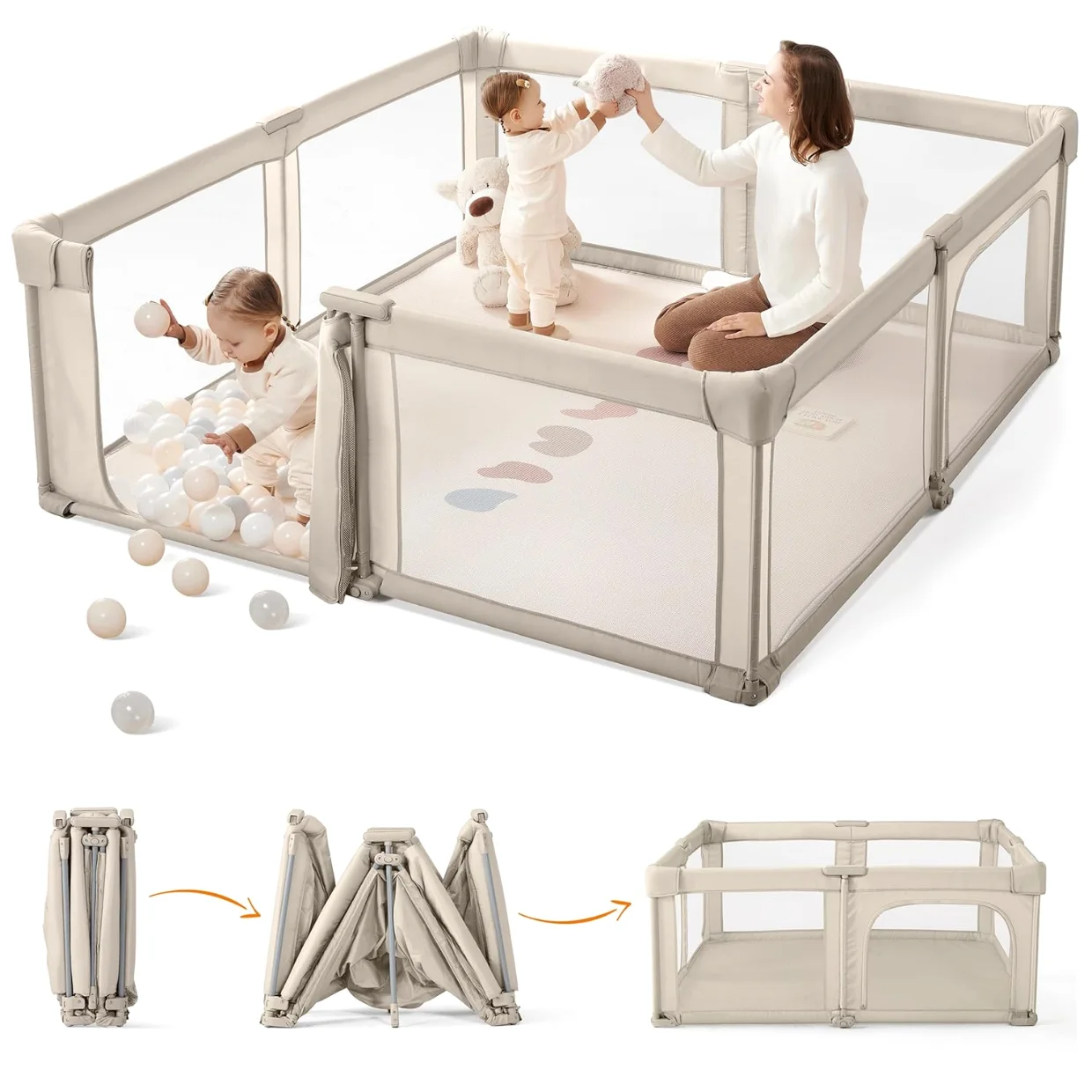
Sweeby Fold-Flat Playpen
One body that stands up, opens and is ready, with a door in the wall and a mat on the floor. From $159.99.
See sizes and colorsKeep reading: How to choose a playpen size for your room · Changing table safety: the habits that matter more than the table